Western Desert Silhouette: A Designer's Review
As someone who spends hours staring at screens digitizing patterns and reviewing embroidery files for my small shop, I approach every new asset with a critical eye. It is not just about whether an image looks pretty on a monitor; it is about how that design translates into thread, how it sits on fabric, and whether it will hold up under the scrutiny of a paying customer. Today, I am taking a close look at the Western Desert Silhouette 20oz Tumbler. While this product is marketed primarily as a graphic for Tumbler Wraps, my interest lies in its potential adaptation for physical textile projects. Can a high-resolution PNG meant for sublimation or printing cross over into the world of machine embroidery design? Let's dig into the practical realities.
First Impressions and Visual Mood
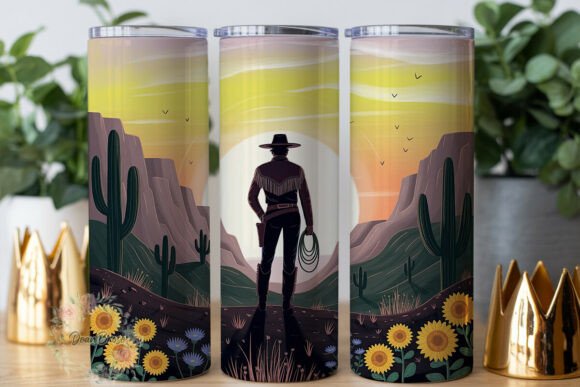
Upon opening the file, the first thing that strikes me is the clarity. The description promises a High Resolution 300 DPI file, and visually, the edges are crisp. The theme evokes a sense of rugged tranquility—saguaro cacti, rolling dunes, and a setting sun. This isn't a busy, cluttered pattern; it relies on strong silhouettes and negative space. For an embroiderer, this is often a good sign. Designs that rely on bold shapes rather than microscopic details tend to stitch out cleaner, especially on textured fabrics like towels or heavy canvas.
The layout is specifically dimensioned at 9.3″ x 8.2″, which is quite large for standard home embroidery hoops but perfect for oversized statements. The mood is distinctly Southwestern, making it an ideal candidate for boutique branding or seasonal collections. However, because this is a Graphics file intended for tumbler wrapping, it arrives as a PNG, not a native stitch file. This is a crucial distinction. You cannot simply load this into your machine. You would need to use digitizing software to convert these pixels into satin stitches, fill stitches, or running stitches. The clean lines of the silhouette suggest it would digitize well, likely requiring minimal manual tweaking if you are experienced with auto-digitizing tools for simple shapes.
Real-World Application Scenarios
Let's imagine a real-life scenario. I have a client who runs a local coffee roastery with a desert theme. They want branded merchandise that goes beyond the usual mugs. They need something durable and tactile. While the Western Desert Silhouette 20oz Tumbler is designed for the curved surface of a cup, I see immediate potential for a large embroidered patch or a statement back-piece on a denim jacket.
If I were to adapt this for a tote bag design, the wide aspect ratio fits perfectly across the lower third of a canvas bag. The silhouette style works beautifully here because it avoids the "holey" look that complex photos sometimes get when stitched out. For a sweatshirt embroidery project, this could serve as a striking chest logo or a full-back graphic for a limited edition run. The lack of tiny, intricate lettering in the silhouette means fewer thread breaks and a faster production time, which is vital for any Etsy seller or craft business owner trying to meet holiday deadlines.
Consider also the realm of home decor. A large pillow cover featuring this desert scene, stitched in earth tones against a cream linen background, would be a stunning personalized gift. The scale of the original file allows you to shrink it down for smaller applications, like a pocket on an apron or a corner detail on a kitchen towel, without losing the integrity of the main shapes. Because the files do not include watermarks, the final finished product looks professional right out of the gate, provided you handle the digitizing correctly.
Technical Considerations and Fabric Choices
Here is where we must be realistic. Since this is a raster image (PNG) and not a pre-digitized embroidery file, the burden of technical execution falls on you. When converting a 300 DPI graphic to stitches, stitch density becomes your biggest variable. If you fill the entire desert sky with dense stitching, you risk creating a stiff, cardboard-like patch that won't drape well on a custom apparel item.
I recommend using a combination of techniques. Use satin stitch for the sharp outlines of the cacti to give them definition, and perhaps a lighter fill stitch or even a decorative running stitch for the dunes to keep the fabric soft. Be extremely careful if you plan to stitch this on stretchy fabrics like jersey knits used in baby embroidery. The large surface area of this design could cause puckering if the stabilizer isn't robust enough. A cut-away stabilizer is almost mandatory for a design of this magnitude to ensure it survives frequent washing.
Another factor is fabric texture. On a plush fleece blanket, fine details vanish. The strength of the Western Desert Silhouette 20oz Tumbler design is its simplicity, which makes it forgiving on textured surfaces. However, if you are working with dark fabric, you must ensure your thread colors have enough contrast. A midnight blue sky might disappear on a black hoodie. Always test your thread colors against the specific material you intend to use. A quick black-and-white mockup can help you judge the value contrast before you ever thread the needle.
Commercial Viability and Brand Consistency
For those looking to expand their design assets for commercial use, versatility is key. This graphic offers a cohesive aesthetic that can tie together a whole product line. Imagine offering a matching set: a sublimated tumbler using the original PNG and an embroidered tote bag using your stitched adaptation. This kind of cross-product consistency builds brand consistency and increases buyer engagement. Customers love seeing a unified look across different items.
However, a word of caution regarding licensing. The product notes state what is included in the download but does not explicitly detail the license terms for resale of stitched goods versus digital redistribution. Before listing this as part of your small shop product lineup or selling it as a digital embroidery file after digitizing it yourself, you must confirm the licensing agreement with the creator. Using a graphic meant for print in a commercial embroidery context without clearance can lead to issues. Assuming the license permits it, the high resolution ensures that your printable mockup images for your online store will look sharp and professional, helping to drive sales.
Final Verdict for Makers
The Western Desert Silhouette 20oz Tumbler is a strong visual asset. While it is sold as a graphic for Tumbler Wraps, its clean lines and generous dimensions make it a hidden gem for embroiderers willing to do the digitizing work. It shines in applications where bold statements are needed, such as large patches, back-of-jacket designs, or statement home decor.
My advice? Do not skip the testing phase. Stitch this out on scrap fabric first. Check how the curves of the dunes handle tight turns. Verify that your hoop size can accommodate the scale you want, or be prepared to split the design if your machine has limitations. If you treat this graphic as a foundation for creativity rather than a plug-and-play solution, it can elevate your handmade product offerings significantly. It captures a specific Western vibe that is timeless, and with the right thread work, it can become a standout piece in any collection.