Skeleton Salon Lover: A Designer's Take on This 20oz Wrap
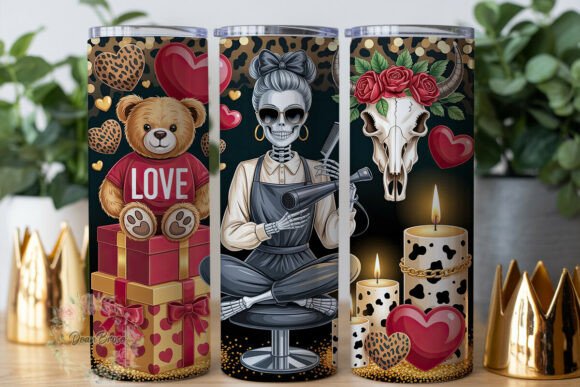
As someone who spends more time staring at stitch maps and fabric swatches than I do sleeping, I approach every new design asset with a critical eye. When I first pulled up the Skeleton Salon Lover 20oz Tumbler Wrap, my initial reaction wasn't just about the aesthetic; it was about translation. How does this graphic, clearly intended for sublimation or vinyl wrapping on a 20oz tumbler, translate into the tactile world of thread and fabric? The product description highlights high-resolution PNG files sized at 9.3″ x 8.2″, which immediately tells me we are dealing with a large-scale graphic rather than a traditional small-logo embroidery file. This distinction is crucial for any Etsy seller or craft business owner looking to expand their product line beyond drinkware.
First Impressions: Mood and Visual Personality
The vibe here is unmistakably quirky and niche. The "Skeleton Salon Lover" theme taps directly into that sweet spot between spooky aesthetics and beauty industry pride. It's the kind of design that resonates with hairdressers, estheticians, and nail technicians who aren't afraid of a little edge. Visually, the layout is expansive. At over nine inches wide, this isn't a subtle chest logo; it's a statement piece. For an embroidery project, this suggests a bold application. The details in the skeleton imagery and the salon tools (likely scissors, combs, or mirrors based on the title) need to be scrutinized for stitch viability. In a digital printable mockup, these lines look crisp, but in thread, fine details can easily get lost if the stitch density isn't managed correctly.
Real-World Application: Beyond the Tumbler
Let's move away from the intended tumbler application for a moment and imagine a real-life scenario. Picture a local boutique owner who wants to create a limited run of branded merchandise for their staff during Halloween season. They have this Skeleton Salon Lover 20oz Tumbler Wrap graphic and want to adapt it for a heavy-weight canvas tote bag design or the back of a denim jacket. Because the file is a high-resolution PNG (300 DPI), it serves as an excellent template for creating a custom applique design or a large fill-stitch backing.
In this scenario, the size works in our favor. A 9.3-inch width is perfect for the back of a sweatshirt embroidery project. However, as a designer, I have to warn you: do not attempt to stitch this as a single continuous block of fill stitch unless you have industrial-grade machinery and heavy-duty stabilizer. The sheer surface area would make the garment stiff and uncomfortable. Instead, I would recommend breaking the design down. Use the graphic as a guide to create separate elements—perhaps the skeleton head as a satin or fill patch, and the text as a separate digitized element. This approach maintains the visual impact while ensuring the finished product remains wearable.
Navigating Fabric and Texture Challenges
When adapting large graphics like this for custom apparel, fabric choice becomes paramount. If you are working with a textured fabric like a waffle knit or a fuzzy fleece, the intricate details of a skeleton face might get swallowed up by the pile. In such cases, simplifying the design or using a contrasting underlay is essential. Conversely, on smooth fabrics like twill or broadcloth, the clarity of the original 300 DPI file can be better preserved through precise stitching.
One major consideration is the hoop size. Most home machines max out at a 5x7 or 6x10 hoop. This design is significantly larger. To execute this as an embroidered patch or direct garment decoration, you will need to utilize the "hoop-and-rehoop" method or split the design digitally before stitching. If you are an apparel decorator without multi-head capabilities, splitting the design requires careful alignment marks to ensure the skeleton's features don't end up disjointed. Always test your alignment on scrap fabric first. There is nothing worse than ruining a client's jacket because the rehoop shifted by a quarter inch.
Commercial Viability and Customer Trust
For small shop product creators, the perceived value of an item often hinges on the quality of the decoration. A poorly executed large design can look amateurish, with puckering or thread breaks visible from across the room. However, when done right, adapting a popular graphic like Skeleton Salon Lover 20oz Tumbler Wrap into a textile format can significantly boost your brand consistency. Imagine offering a matching set: the sublimated tumbler and an embroidered apron or cap. This cross-product strategy builds trust and encourages higher average order values.
That said, transparency is key. Since the original purchase includes PNG files for tumbler wraps and not necessarily a digitized machine embroidery design, you must clarify this to your customers if you are selling the digital file itself. If you are selling the physical handmade product, the limitation is on your production end, not the customer's. Ensure you have the license to use this graphic for commercial goods. The product note mentions the files are watermark-free, which is great for production, but always double-check the specific licensing terms regarding resale of finished items versus digital redistribution.
Practical Notes for the Studio
Before committing to a full production run, here are my top recommendations for working with a graphic of this scale and style:
- Test on Scrap First: Never skip this step. Stitch the design on the exact same fabric and stabilizer combination you plan to use for the final item.
- Check Thread Contrast: Skeleton designs often rely on high contrast. Ensure your thread colors pop against the fabric background. A black skeleton on a navy shirt might disappear; consider using a lighter outline or metallic thread for definition.
- Review Stitch Density: If you digitize this yourself, reduce the fill density in large areas to prevent stiffness and needle heat buildup.
- Stabilizer Selection: For a 9-inch wide design, a cut-away stabilizer is almost always necessary to support the weight of the stitching over time, especially on stretchy fabrics.
- Mockup Verification: Create black and white mockups to check for value contrast. If the design looks muddy in grayscale, it will likely lack definition when stitched.
Ultimately, the Skeleton Salon Lover 20oz Tumbler Wrap is a versatile graphic that offers tremendous potential for creative entrepreneurs willing to put in the technical work to adapt it. It bridges the gap between trendy sublimation art and classic textile decoration. Whether you are creating a holiday gift for a stylist friend or launching a new line of boutique merchandise, the key lies in respecting the limitations of the medium while leveraging the strong visual identity of the design. With careful planning regarding hoop sizes, fabric textures, and stitch techniques, this graphic can transform from a simple tumbler wrap into a standout piece of wearable art.