Dragon Fruit 20oz Glass Can Wrap SVG: A Designer's Take
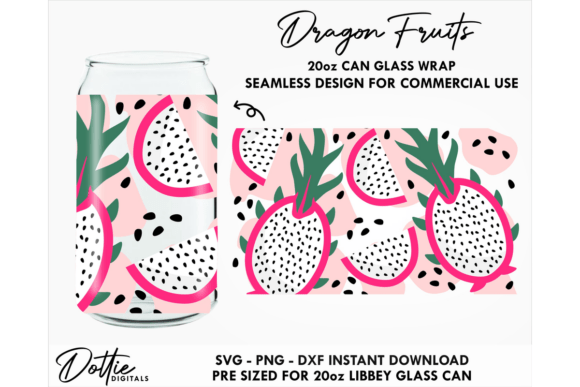
As a designer who spends most of my day staring at screens and threading needles, I approach every new digital embroidery file with a mix of excitement and skepticism. When I first pulled up the Dragon Fruit 20oz Glass Can Wrap SVG, my initial reaction was purely visual. The vibrant pink and green palette immediately screams summer, freshness, and tropical energy. However, looking at a vector graphic on a monitor is vastly different from translating that image into thread on fabric. This review isn't about how it looks as a decal; it's about how this specific design holds up when you try to turn it into a tangible, stitched handmade product.
The Visual Personality and Stitch Potential
The layout of this design is inherently curved, meant to hug the cylindrical shape of a 20oz glass can. In the world of Tumbler Wraps and Graphics, this curvature is standard, but for an embroiderer, it presents a unique challenge and opportunity. The dragon fruit theme relies heavily on the contrast between the deep magenta skin, the bright green scales, and the speckled white interior flesh.
If I were digitizing this myself for a machine embroidery design, I would be thinking immediately about stitch density. The seed details in the fruit flesh are tiny. If rendered as individual satin stitches or even small fill areas, they could easily become a bird's nest of thread on anything other than high-count twill. For a successful embroidery project, these details might need to be simplified into running stitches or omitted entirely depending on the final size of the hoop. The bold outlines of the fruit slices, however, are perfect for a thick satin stitch border that pops against a dark background.
Real-World Application: The Boutique Tote Scenario
Let's walk through a real case scenario. Imagine a client runs a small juice bar and wants branded merchandise. They love the Dragon Fruit 20oz Glass Can Wrap SVG and ask if we can put it on a canvas tote bag for their loyalty program. This is where practical judgment comes in. While the original file is intended for vinyl cutting on glass, adapting it for a tote bag design requires careful consideration of scale.
On a flat canvas tote, the curve of the original wrap design might look slightly distorted if not adjusted. I would likely flatten the perspective slightly or treat it as a central panel motif. The colors are vivid enough to work well on natural cotton or black canvas. For a custom apparel piece like a sweatshirt, this design would shine as a chest pocket emblem or a large back print. The organic shapes of the dragon fruit scales translate beautifully into applique design techniques. Instead of trying to stitch every pixel of color, a smart move would be to cut the main fruit shapes from felt or cotton fabric and use the SVG as a guide for placement, then satin stitch around the edges. This reduces bulk and ensures the colors remain true to the digital preview.
Navigating Fabric Textures and Hoop Limitations
One of the biggest hurdles with detailed Graphics like this is the substrate. If you are attempting to stitch this directly onto a textured fabric like a waffle knit towel or a fuzzy fleece hoodie, the fine lines of the dragon fruit seeds will get lost. In those cases, I strongly advise using a heavy cut-away stabilizer and perhaps switching to a simpler fill pattern.
Furthermore, consider the hoop size. Since this is a wrap design, it is likely wide. If your machine has a standard 5x7 hoop, you might be able to fit a single fruit slice perfectly. However, capturing the entire wrap in one go might require a larger hoop or a "hoop-and-rehoop" strategy, which risks alignment issues. For curved surfaces like caps, this design is risky unless you isolate just one segment of the fruit. Trying to force a wide, curved wrap onto the front panel of a baseball cap will result in puckering and distortion. It is better suited for flat panels on pillow covers, kitchen towels, or the back of a denim jacket.
Critical Considerations for Commercial Use
For Etsy sellers and small shop product creators, consistency is key. If you plan to sell this as a personalized gift or part of a holiday embroidery collection, you need to ensure the finished product looks professional every time. Here are my practical notes for integrating this asset into your workflow:
- Test on Scrap First: Never run this on your final garment without a test stitch-out. Check how the thread colors blend, especially the transition from the pink skin to the white flesh.
- Check Contrast: On dark fabrics, ensure you have enough light thread coverage. You may need an underlay of white thread to make the dragon fruit colors pop.
- Simplify Details: If the digitized version retains too many tiny seed dots, consider removing them to prevent thread breaks and improve washability.
- Verify Licensing: Since this is sold as a digital download for cutting machines, confirm with the creator if you have the rights to use the imagery for commercial embroidery sales. Just because you can cut it doesn't always mean you can stitch and sell it.
- Mockup Verification: Before listing items, create a printable mockup showing the design on various fabric textures to manage customer expectations regarding how the texture affects the look.
Final Verdict on Value and Aesthetics
The Dragon Fruit 20oz Glass Can Wrap SVG is a visually striking asset that brings a modern, fruity aesthetic to any project. Its strength lies in its bold color blocking and recognizable silhouette. For an experienced designer, it offers a great foundation for commercial embroidery projects, provided you respect the limitations of thread versus ink. It excels on smooth, stable fabrics where the details can breathe.
While it was born as a graphic for glass cans, its potential extends far beyond. With the right adjustments to stitch density and thoughtful application of fill stitch and satin stitch techniques, it can elevate a simple baby embroidery onesie or a chic embroidered patch. The key is to treat the SVG not as a final instruction manual, but as a creative springboard. By adapting it to the physical realities of thread and fabric, you transform a digital file into a high-value, tactile item that customers will trust and cherish. Always remember to check the specific file compatibility and licensing terms included in the zip file before committing to a large production run.