Raccoon Cute but Feral Quote: A Designer's Review
As a designer who spends more time staring at stitch maps than most people care to admit, I approach every new machine embroidery design with a mix of optimism and skepticism. We have all been there: you buy a file based on a cute thumbnail, only to find the stitch density is so high it turns your fabric into cardboard, or the lettering is so small it becomes an illegible blob once stitched out. Recently, I came across the Raccoon Cute but Feral Quote Tumbler PNG. While this asset is marketed primarily for Tumbler Wraps and sublimation, my brain immediately started translating those pixels into threads. Could this chaotic, humorous graphic translate into a viable embroidery project for a custom apparel line? Let's dig into the practical reality of using this design in a real-world craft business setting.
First Impressions: Mood and Visual Personality
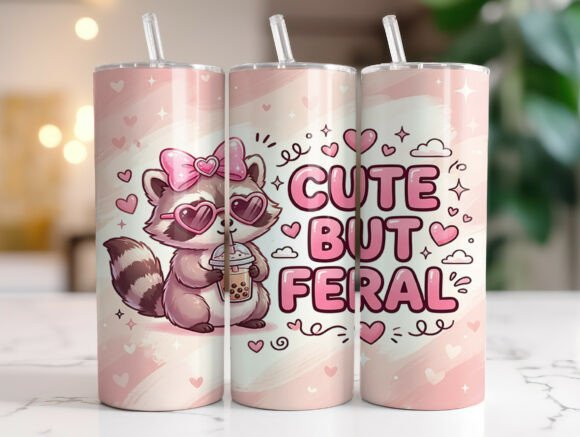
The first thing that strikes me about the Raccoon Cute but Feral Quote Tumbler PNG is its attitude. In a market saturated with overly sweet, generic animal motifs, this design leans into the "trash panda" persona with genuine character. The layout balances a whimsical illustration with a bold, relatable quote. For an embroidery designer, this duality presents both an opportunity and a challenge. The visual personality screams "modern boutique," making it perfect for customers who want their handmade product to reflect a bit of edge alongside their love for nature.
However, because this is originally a high-resolution Graphics file intended for printing rather than stitching, the transition requires careful planning. The 300 DPI resolution is excellent for clarity, meaning the lines are crisp enough to trace or vectorize for digitizing. If you are looking to create a custom apparel line featuring this motif, the source material is robust. The mood is playful yet rebellious, fitting perfectly for teen hoodies, tote bags for college students, or even quirky kitchen decor for the raccoon-obsessed.
Real-World Application: From Screen to Stitch
Let's imagine a realistic scenario. You run a small Etsy shop specializing in personalized gift items for animal lovers. A customer requests a heavy canvas tote bag design featuring a raccoon theme. The Raccoon Cute but Feral Quote Tumbler PNG serves as the perfect inspiration board. Since the original file includes both straight and tapered versions for 20oz skinny tumblers, the composition is already optimized for vertical spaces. This makes it surprisingly adaptable for the front panel of a tote bag or the chest area of a zip-up hoodie.
When adapting this for sweatshirt embroidery, the quote becomes the focal point. In a printed format, gradients and shadows work effortlessly. In embroidery, we must rely on thread colors and stitch types to create depth. I envision using a combination of satin stitch for the bold lettering to ensure readability and a textured fill stitch for the raccoon fur to mimic its coarse, wild look. The "feral" aspect of the quote suggests that the stitching shouldn't be too polished; perhaps incorporating some intentional running stitch outlines could add to the rugged, handcrafted aesthetic.
For a holiday embroidery collection, this design could be reworked into an embroidered patch. Patches are incredibly popular right now, and the contained nature of the graphic fits well within a standard 4x4 or 5x7 hoop. Imagine these patches sewn onto denim jackets or backpacks. The humor of the quote adds value, turning a simple accessory into a conversation starter. This is exactly the kind of small shop product that builds brand loyalty because it feels unique and specific to a certain lifestyle.
Technical Considerations and Fabric Challenges
Here is where the experienced designer must pause and apply some critical judgment. The Raccoon Cute but Feral Quote Tumbler PNG is a print file, not a native embroidery file. You cannot simply load this PNG into your machine. It requires professional digitizing. If you attempt to use auto-digitizing software on this without manual tweaking, you risk disaster. The fine details in the raccoon's face and the specific kerning of the quote need human intervention to ensure they survive the stitching process.
One major concern is the hoop size. The original dimensions are roughly 9.3" x 8.2", which is quite large for many home embroidery machines. To make this work on a standard cap or a baby onesie, you will need to scale it down significantly. When shrinking detailed graphics, tiny lettering often disappears. You must verify that the text remains legible at smaller sizes. If the quote becomes unreadable below 4 inches wide, you may need to simplify the font or increase the spacing between letters before digitizing.
Fabric choice is equally critical. This design would struggle on highly textured fabrics like thick wool sweaters or looped terry cloth unless you use a significant amount of stabilizer and perhaps a topping to prevent the stitches from sinking. For stretchy fabrics, such as those used in baby embroidery projects, the density of the fill stitches must be reduced to prevent puckering. A dense design on a stretchy knit can cause the garment to warp permanently after the first wash. Always test the design on scrap fabric that matches your final material. Check how the thread colors contrast against dark versus light backgrounds; a black raccoon on a navy sweatshirt might vanish without a contrasting outline.
Commercial Viability and Brand Consistency
For Etsy sellers and creative entrepreneurs, the commercial potential of this design lies in its versatility. However, licensing is paramount. Since this is sold as a digital download for tumbler wraps, you must confirm the license terms before selling finished embroidered goods. Some creators allow physical sales but prohibit reselling the digital file itself. Assuming the license permits commercial use of finished items, this design can elevate your craft business by offering something distinct from the standard monograms.
Visual appeal drives buyer engagement. A well-executed embroidery version of this quote signals professionalism. It shows that you understand how to adapt trends into tangible, high-quality goods. Whether you are creating printable mockup images for your online store or displaying physical samples at a craft fair, the "cute but feral" vibe resonates with a demographic that values authenticity. It moves away from the mass-produced feel of big-box stores and leans into the charm of the handmade movement.
Furthermore, consider the durability factor. Unlike a sublimated tumbler wrap that might peel over time, a properly stitched finished product can withstand years of wear and washing. This longevity increases customer trust. If a client buys a jacket with this raccoon design, they expect it to last. Ensuring your stitch density is balanced—not too sparse to look cheap, not too dense to crack—will define the lifespan of the item.
Final Verdict for the Practical Maker
The Raccoon Cute but Feral Quote Tumbler PNG is a strong candidate for adaptation, provided you respect the limitations of the medium. It is not a plug-and-play solution for embroidery, but rather a high-quality source asset for a skilled digitizer. Its strength lies in its character and composition, which translate well to various design assets like patches, aprons, and pillow covers.
Before committing to a production run, I strongly advise creating a prototype. Stitch it out on a similar weight fabric to your intended product. Inspect the small details closely—are the eyes of the raccoon clear? Is the quote easy to read from three feet away? Test it in black and white to ensure the contrast holds up without color reliance. If you are new to digitizing, consider hiring a professional to convert this PNG into a stitch file to ensure optimal performance.
In the world of commercial embroidery, uniqueness is currency. This design offers a fresh take on animal motifs that avoids cliché. With the right technical execution and attention to fabric compatibility, it can become a standout piece in your portfolio. Just remember: the image on the screen is only half the battle; the magic happens when the needle hits the fabric.