Skeleton Cold Heart 20oz Tumbler Wrap Review
As a designer who spends more time staring at stitch maps than most people spend on their phones, I approach every new embroidery file with a mix of curiosity and skepticism. We have all been there: you buy a design based on a flashy thumbnail, only to find out the stitch density is a nightmare or the details vanish once the needle hits the fabric. Today, I am taking a close look at the Skeleton Cold Heart 20oz Tumbler Wrap. While the product listing categorizes this under Tumbler Wraps and Graphics, my job is to translate those high-resolution PNG assets into tangible, stitched reality for real-world projects.
First Impressions: Mood and Visual Personality
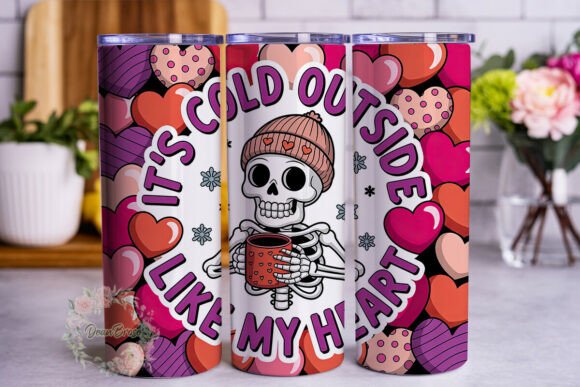
The moment you load the Skeleton Cold Heart 20oz Tumbler Wrap onto your screen, the vibe is immediate. It is edgy but not overly aggressive, striking that perfect balance between gothic aesthetic and modern boutique style. The layout, sized at 9.3″ x 8.2″, offers a substantial canvas. In the world of digital embroidery file preparation, space is everything. This dimension allows for a full-wrap effect on a 20oz tumbler, but for us embroiderers, it signals something else: versatility.
The "Cold Heart" theme suggests a skeletal motif, likely involving intricate line work and perhaps some shading techniques if converted correctly. The high resolution of 300 DPI means the source image is crisp. There are no pixelated edges to guess at when digitizing or preparing the artwork for appliqué. The visual personality here screams "custom apparel" for the alternative crowd, yet it is clean enough to work as a statement piece on a neutral tote bag design or a trendy sweatshirt.
From Screen to Stitch: A Real-World Scenario
Let's move beyond theory. Imagine I have a client running a small shop product line focused on Halloween and everyday goth chic. They want a signature item that stands out at craft fairs. They hand me the Skeleton Cold Heart 20oz Tumbler Wrap files and ask, "Can we make this into an embroidered patch for denim jackets?"
This is where the rubber meets the road. Since the purchase includes PNG files for both straight and tapered tumblers, I am working with raster images, not pre-digitized stitch files. This is a crucial distinction. As an experienced reviewer, I see this as an opportunity rather than a hurdle. The clarity of the 9.3″ x 8.2″ image allows me to trace the skeleton and heart elements with precision. I can decide exactly where to use a satin stitch for bold outlines and where a fill stitch would add necessary texture without becoming too stiff.
If I were stitching this directly onto a heavy cotton sweatshirt embroidery project, the large surface area of the original wrap design means I can scale it down slightly to fit a standard hoop while retaining all the delicate bone details. The "cold heart" concept translates beautifully into thread; imagine using metallic threads for the skeleton to give it that icy, shimmering effect against a dark charcoal fabric. The customer reaction to a finished product like this would likely be strong because it feels bespoke, not mass-produced.
Navigating Fabric and Hoop Challenges
However, we must be realistic about where this design shines and where it requires caution. The original intent is for Tumbler Wraps, which are smooth, rigid surfaces. Transferring this to textiles introduces variables. If you plan to use this on stretchy fabrics like baby clothes or thin jersey knits, you need to be careful. The detailed nature of a skeleton design often involves fine lines. On a stretchy fabric, without the right stabilizer, those lines can pucker or distort, ruining the "cold" precision of the look.
For baby embroidery or items that will see frequent washing, I would recommend simplifying the smallest details. Tiny fingers on a skeletal hand might blend together after ten wash cycles if the thread colors are too similar or if the stitch count is too high in a small area. Similarly, if you are attempting this on a curved surface like a cap, the 9.3-inch width is too large for a standard cap frame. You would need to isolate the central heart element or a portion of the skeleton to fit a smaller hoop size.
Dark fabrics are a natural home for this design, but remember that the downloaded files will NOT include any watermark, which is great for visibility, but you must ensure your thread contrast is high enough. A black skeleton on a navy shirt might disappear. Test your thread color choices on scrap fabric first. Always run a test stitch-out. It is the golden rule of our trade.
Commercial Viability and Brand Consistency
For the Etsy seller or creative entrepreneur, the value of the Skeleton Cold Heart 20oz Tumbler Wrap lies in its adaptability. It is not just a sublimation print; it is a design asset waiting to be reimagined. Using this graphic as a base for an applique design could speed up production time while maintaining a handmade feel. Cut the heart shape from felt or leather, then stitch the skeletal details over it. This adds dimension and perceived value to the finished product.
When building a brand, consistency is key. If your boutique specializes in edgy, personalized gifts, this design fits right in. It works for holiday embroidery during October, but because it is a skeleton and not a pumpkin, it has a longer shelf life as a year-round alternative fashion statement. The professionalism of the final output depends entirely on your execution. A well-stitched version of this design builds customer trust. It shows that you care about detail, from the density of the stitches to the cleanliness of the backing removal.
Practical Notes for the Maker
Before you commit to a full production run of custom apparel or patches, keep these practical tips in mind:
- Check Licensing: Since this is sold as a graphic asset, confirm the license terms regarding commercial use for physical goods versus digital resale. Usually, selling the physical embroidered item is fine, but reselling the digitized file might be restricted.
- Mockup Testing: Use the high-res PNG to create printable mockups. See how the design looks on a black tee versus a white tote bag before you thread the machine.
- Density Check: If you are digitizing this yourself, watch your stitch density. Too many layers on a thick jacket can cause the fabric to bowl. Too few on a thin towel will look sparse.
- Detail Inspection: Zoom in on the original 300 DPI file. Are there tiny gaps between bones? Ensure your digitizing software captures these without creating unnecessary jump stitches.
- Fabric Texture: Remember that fabric texture affects the final look. A looped towel will swallow fine details, while a smooth broadcloth will showcase them.
In conclusion, the Skeleton Cold Heart 20oz Tumbler Wrap is a robust starting point for any designer willing to put in the prep work. It bridges the gap between digital graphics and tactile handmade product creation. Whether you are making a one-off personalized gift or stocking inventory for a small shop, this design offers the mood and scale needed to create something memorable. Just respect the medium, choose your materials wisely, and let the needle do the talking.