Running Horses Tumbler Wrap: A Designer's Review
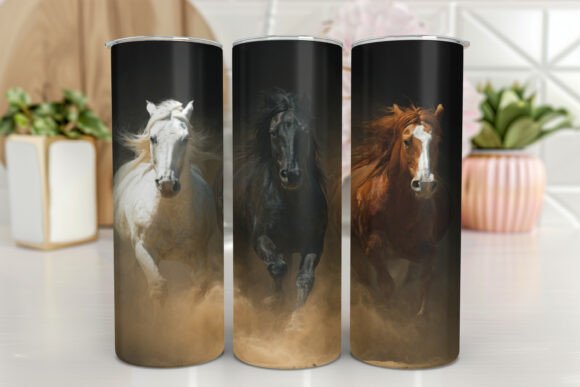
As a designer who spends more time staring at stitch maps than most people spend watching television, I approach every new digital embroidery file with a healthy dose of skepticism. We have all been there: you download a beautiful preview, only to find the stitch count is astronomical, the density is too high for standard cotton, or the details vanish once the thread hits the fabric. Today, I am taking a close look at the Running Horses Tumbler Wrap Wild Western. While the product listing categorizes this under Tumbler Wraps and Graphics, my interest lies in translating this wild western aesthetic into tangible, stitched reality for clients who want more than just a printed sublimation wrap.
The First Impression: Capturing Motion in Thread
When I first pulled up the high-resolution files from the .zip archive, the immediate takeaway was the dynamic energy of the composition. The "Wild Western" theme isn't just about cowboy hats and boots; it is about movement, dust, and freedom. The layout of the running horses suggests a narrative that flows perfectly around a cylindrical object, which is why it was originally sized for a 20oz straight skinny tumbler at 9.3″ x 8.2″. However, as an embroidery specialist, I see potential far beyond drinkware. The visual personality of this design screams for texture. In a digital graphic, shadows are created by gradients, but in our world, shadows are created by stitch density and direction.
The mood created here is rugged yet elegant. It feels like something that belongs on a boutique product rather than a mass-produced item from a big-box store. For an Etsy seller or a small shop owner, this kind of distinct visual identity is gold. It separates your handmade product from the sea of generic inventory. The question I ask myself immediately is: how will this translate when we swap pixels for thread?
Real-World Application: From Screen to Sweatshirt
Let's move away from the theoretical and talk about a real case scenario. Imagine a client comes to you requesting a custom gift for a rancher or someone who loves equestrian sports. They want something durable, tactile, and personal. While the original specs mention a tumbler wrap, I envision this design shining as a large back piece on a heavyweight sweatshirt embroidery project or perhaps centered on a canvas tote bag design.
If I were stitching this onto a denim jacket or a structured cap, the flow of the horses would need to be carefully hooped to ensure the motion isn't distorted by the curve of the garment. The 9.3″ width is substantial. On a tote bag, this becomes a statement piece. On a baby embroidery item, however, you would need to scale it down significantly, which brings us to a critical point about detail retention. When shrinking a design intended for a large surface area, fine lines can merge. If the original graphic relies on thin outlines to define the horses' muscles or manes, those might need to be converted to thicker satin stitch columns or simplified fill stitch areas to survive the scaling process without becoming a muddy mess.
Navigating Fabric Textures and Challenges
One of the most important aspects of reviewing a design like Running Horses Tumbler Wrap Wild Western is understanding where it might struggle. This is not a simple monogram; it is a complex scene. If you attempt to stitch this directly onto a textured fabric like a waffle knit or a loosely woven linen, you risk the stitches sinking in or the fabric puckering. In these cases, a robust stabilizer is non-negotiable. I would recommend a cut-away stabilizer for any garment that will undergo frequent washing, ensuring the finished product maintains its shape over time.
Dark fabrics present another challenge. The preview likely shows the horses against a specific background color. If you are stitching this onto black navy twill, you must verify that the thread colors provided in the palette offer enough contrast. You may need to manually adjust the color sequence in your embroidery software to ensure the horses pop rather than disappear into the background. Furthermore, if the design includes tiny details meant to look like distant fence posts or sagebrush, these could become problematic on stretchy fabrics like jersey knits. For custom apparel made from stretch materials, I would advise simplifying the background elements or using an applique design technique where the background is a separate fabric patch, reducing the overall stitch count and improving comfort.
Commercial Viability and Brand Consistency
For those running a craft business, consistency is key to building trust. If you sell this as part of a holiday collection or a line of western-themed gear, the quality of the stitch-out defines your brand. A poorly digitized version of this design—with jagged edges or excessive thread breaks—will hurt your reputation faster than anything else. Conversely, a clean, crisp execution of these running horses elevates the perceived value of the item. It transforms a simple pillow cover or kitchen towel into a heirloom-quality personalized gift.
When considering this for commercial use, such as creating stock design assets or selling finished goods at a craft fair, you must pay attention to the licensing terms. The product description notes that the listing is for digital files only, specifically graphics for tumblers. Before using this imagery for commercial embroidery projects, you must confirm whether the license extends to physical goods or if it is restricted to digital sublimation. Never assume a graphic file includes the rights to reproduce the image in thread for resale without checking the specific agreement.
Practical Notes for the Embroiderer
Before you commit to stitching this on a client's expensive leather jacket or a batch of boutique onesies, follow these practical steps:
- Test on Scrap First: Always run a test stitch-out on the exact same fabric and stabilizer combination you plan to use for the final product. This reveals issues with density and registration.
- Check Hoop Size: The design dimensions are roughly 9.3″ x 8.2″. Ensure your machine has a hoop large enough to accommodate this in one go. Jumping hoops on a continuous image of running horses can result in visible alignment marks that ruin the illusion of motion.
- Review Stitch Density: Large fill areas can become stiff. If the design feels too board-like after stitching, consider reducing the density in your editing software or breaking up large solid areas with texture stitches.
- Mockup Verification: Even though this is a graphic, create a black-and-white mockup to see how the values translate. If the horses blend into the background in grayscale, they will likely lack definition in thread.
- Detail Inspection: Zoom in on the corners and the horses' hooves. Tiny, isolated stitches often cause bird nests. These may need to be manually edited or removed.
In conclusion, the Running Horses Tumbler Wrap Wild Western offers a compelling visual narrative that, with the right technical adjustments, can transcend its original purpose as a tumbler graphic. It holds immense potential for embroidered patch creation, statement sweatshirts, and high-end home decor. By respecting the limitations of the medium and preparing your materials correctly, you can turn this digital asset into a stunning physical reality that resonates with customers and stands the test of time.