In My Cozy Era Coffee Cup Hand Lettering Review
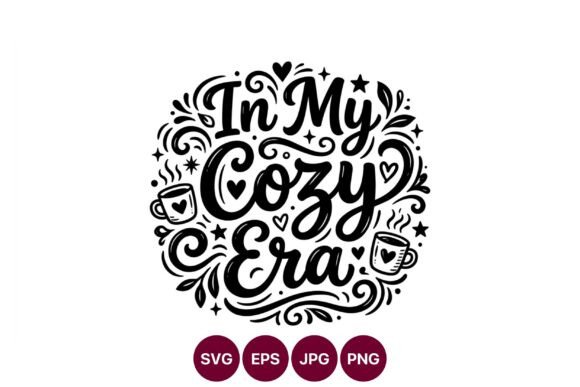
As a designer who spends more time staring at stitch maps than most people care to admit, I approach every new digital embroidery file with a mix of excitement and skepticism. We have all been there: you download a beautiful graphic, only to realize it falls apart the moment you try to translate it into thread. That is why I took a close look at the In My Cozy Era Coffee Cup Hand Lettering design before committing it to any client projects or personal handmade products. This isn't just about whether the image looks cute on a screen; it is about how that black and white hand lettering phrase, decorated with steaming coffee cups, hearts, stars, and swirls, actually behaves under the needle.
First Impressions and Visual Personality
When I first opened the ZIP folder containing the SVG, PNG, JPG, and EPS files, the high-contrast nature of the artwork immediately stood out. For an embroidery project, contrast is king. The bold black lines against the white background (or vice versa) suggest a design that relies heavily on clean outlines and distinct shapes rather than subtle shading. The "cozy era" theme taps directly into the current cultural zeitgeist of self-care and comfort, making it an instant winner for specific demographics.
The layout feels organic. The inclusion of swirls and stars around the central text breaks up the rigidity of standard typography, giving it a whimsical, hand-drawn feel. However, from a technical standpoint, this fluidity presents both opportunities and challenges. The varying line weights in the hand lettering suggest that if you are digitizing this yourself from the provided vector files, you will need to be strategic about your stitch density. Thick areas might handle a dense fill stitch well, but the thinner connecting lines and delicate stars will likely require a precise running stitch or a narrow satin stitch to maintain clarity without becoming bulky.
Real-World Application: The Tote Bag Test
To truly evaluate this design, I envisioned a specific real-life scenario: creating a limited run of tote bags for a local coffee shop's loyalty program. This is a classic use case for custom apparel and accessories where durability and visual appeal must coexist. The In My Cozy Era Coffee Cup Hand Lettering fits the aesthetic perfectly. It speaks directly to the customer base—people who value their morning routine and want to carry that sentiment with them.
On a canvas tote bag, the texture of the fabric adds a layer of complexity. Canvas has a weave that can sometimes swallow fine details. Because this design includes small elements like stars and the steam rising from the coffee cups, I would advise testing the embroidery file on scrap canvas first. If the design is too dense, the fabric might pucker, ruining the "cozy" vibe with a stiff, cardboard-like feel. Conversely, if the stitch count is too low, the gaps between stitches might reveal the fabric underneath too aggressively, losing the solid black-and-white impact seen in the original Illustrations.
For this specific application, using a cut-away stabilizer would be non-negotiable. The weight of the thread combined with the movement of a tote bag requires stability that tear-away options simply cannot provide long-term. The result, if executed correctly, would be a finished product that feels premium and intentional, elevating a simple bag into a piece of wearable branding.
Versatility Across Products
Beyond tote bags, this design has significant potential for sweatshirt embroidery. The cozy theme aligns naturally with fleece and French terry fabrics. However, stretchy knits demand caution. The swirling elements and curved text could distort if the fabric stretches significantly after stitching. When working on a sweatshirt, I recommend hooping the stabilizer and fabric together tightly to prevent shifting. The high-contrast nature of the design means it would pop beautifully on heather grey, cream, or even deep forest green garments, offering Etsy sellers and boutique owners a versatile asset for their winter collections.
I also see strong potential for holiday embroidery gifts. Imagine this stitched onto a kitchen tea towel or an apron. The coffee cup motif makes it a perfect housewarming or teacher appreciation gift. In these contexts, the personalized gift aspect shines. While the text itself is fixed, the design acts as a statement piece that resonates emotionally with the recipient. For small shop products, this kind of relatable messaging drives engagement because it feels less like a logo and more like a lifestyle affirmation.
Navigating Technical Challenges
While the design is charming, there are areas where you must proceed with care. The tiny details—the small hearts and the tips of the stars—are vulnerable points. If you attempt to stitch this on a curved surface like a cap, the geometry of the hat buck might compress these small elements, causing them to merge or look muddy. Caps are notoriously difficult for detailed lettering, so I would suggest reserving this design for flat surfaces unless you have advanced digitizing skills to adjust the pull compensation specifically for headwear.
Furthermore, consider the hoop size relative to the design dimensions. If the design is large, you may need to re-hoop for multi-position stitching, which introduces alignment risks. Always check the dimensions provided in the file description against your machine's maximum hoop capacity. Additionally, when stitching on dark fabrics, remember that the original artwork is high-contrast black and white. You will need to invert your thread colors carefully. Using white thread on black fabric works, but ensure your underlay stitches are sufficient to prevent the dark fabric from peeking through the light thread, which can diminish the crispness of the Graphics.
Business Value and Brand Consistency
For craft business owners and commercial embroidery professionals, the value of a design like In My Cozy Era Coffee Cup Hand Lettering lies in its marketability. Trends move fast, and "cozy culture" is currently having a major moment. Utilizing trending phrases in your printable mockup previews can significantly boost click-through rates on platforms like Etsy. However, buyer trust is built on the quality of the finished product. A sloppy stitch job on a trendy design can damage your reputation faster than an outdated one.
This design encourages a sense of warmth and approachability. If your brand focuses on handmade, heartfelt items, this asset reinforces that identity. It tells your customers that you understand their desire for comfort and simplicity. Whether you are selling embroidered patches to iron onto jackets or creating full tote bag designs, the consistency of using high-quality, relevant imagery helps build a recognizable brand voice.
Final Designer Notes and Best Practices
Before you launch your production run, here are a few practical steps to ensure success. First, always test the design on a scrap piece of the exact fabric you intend to use. Thread tension and fabric texture interact in unpredictable ways. Second, review the license terms included in the download. While the file includes formats suitable for both personal and commercial use, confirming the specific allowances for resale is crucial for protecting your craft business.
Pay close attention to thread color contrast. Even though the design is black and white, experimenting with off-white or cream thread on light fabrics can add a softer, more vintage touch that enhances the "cozy" feeling. Finally, inspect the small details after your test stitch. Are the stars distinct? Is the text legible? If not, you may need to simplify the digitizing settings or choose a different fabric.
In conclusion, In My Cozy Era Coffee Cup Hand Lettering is a strong contender for anyone looking to add a touch of modern warmth to their embroidery project lineup. It bridges the gap between digital art and tactile craft effectively, provided you respect the technical limitations of your materials. With the right preparation and attention to detail, this design can become a staple in your portfolio, delighting customers and adding value to your handmade creations.