Fishing Wood Grain 20oz Tumbler Wrap Review
As a designer who spends more time staring at stitch maps than most people spend on their phones, I approach every new digital embroidery file with a mix of excitement and skepticism. We have all been there: you buy a design that looks stunning in the preview image, only to find out it turns into a bird's nest of thread once it hits the fabric. That is why I took a close look at the Fishing Wood Grain 20oz Tumbler Wrap. While the product listing categorizes this under Tumbler Wraps and Graphics, my job is to translate those visual assets into tangible, stitched reality for clients and small shop products.
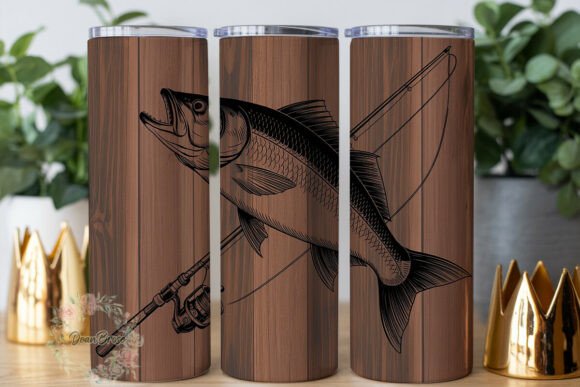
The first thing that strikes me about this design is its mood. It isn't just a generic fish icon; the integration of the wood grain texture gives it a rustic, outdoorsy personality that feels authentic rather than cartoonish. For an embroidery project, this implies a need for careful attention to thread colors and stitch density. The visual layout suggests a wide format, fitting the 9.3″ x 8.2″ dimensions provided. In the world of sublimation, this is perfect for a tumbler. But for us stitchers, this dimensional data tells a different story about scaling and placement on textiles.
Translating Graphics into Stitched Reality
Let's get into a real-world scenario. Imagine a client comes to your craft business asking for a custom gift for their father who loves weekend fishing trips. They want something rugged but refined. A standard sweatshirt embroidery with a simple outline might feel too juvenile. This is where the Fishing Wood Grain 20oz Tumbler Wrap concept shines, even if we aren't putting it on a cup. By adapting this graphic for a heavy-weight canvas tote bag design or a structured embroidered patch, you elevate the handmade product from a simple craft to a boutique-quality item.
The "wood grain" element is the critical factor here. In a PNG file, this is achieved through pixel variation. In embroidery, we have to replicate this texture using fill stitch patterns or perhaps a combination of running stitch overlays to mimic the grain lines. If you are planning to use this as a base for an applique design, the wood texture could be created with the fabric itself, using the digital file purely as a placement guide. This approach reduces stitch density, making the finished product softer and more comfortable to wear, which is crucial for custom apparel.
Practical Application for Small Shops and Etsy Sellers
For Etsy sellers and creative entrepreneurs, versatility is key. You need designs that can work across multiple product lines without losing their appeal. The Fishing Wood Grain 20oz Tumbler Wrap offers a strong thematic anchor. It fits perfectly into niches like holiday embroidery for Father's Day, rustic wedding gifts for groomsmen, or nursery decor for a cabin-themed baby room. However, because the original asset is high-resolution (300 DPI) and sized for a large surface area, you cannot simply shrink it down to a 2-inch pocket logo without losing the integrity of the wood grain details.
When creating printable mockup images for your online store, this graphic provides excellent visual interest. But remember, what sells in a JPEG doesn't always stitch well. If you are selling personalized gift items, you must manage customer expectations. Explain that while the design features intricate grain details, some of those micro-textures may need to be simplified when converted into a machine embroidery design to ensure durability and clean stitching.
Navigating Fabric Choices and Technical Constraints
Here is where experience matters. The success of this design depends heavily on your material selection. The wood grain effect relies on contrast. If you stitch this onto a dark navy fabric texture without proper underlay or contrasting thread, the detail will vanish. I recommend testing this on light to medium-toned fabrics first. Cotton twill, denim, or linen blends are ideal candidates because they provide a stable base that complements the rustic theme.
You must also be cautious with stretchy fabrics. A design with this much surface area and potential density can cause puckering if not handled correctly. Always use a high-quality stabilizer—likely a cut-away for garments that will be washed frequently. If you are attempting this on a curved surface like a cap, the 9.3-inch width is a non-starter unless you break the design into segments, which is rarely advisable for a continuous grain pattern. Stick to flat surfaces like tote bags, pillow covers, or the back of a jacket.
Another consideration is the hoop size. Most home machines max out at 5x7 or 6x10 inches. Since this graphic is designed for a 20oz tumbler wrap, it exceeds standard hoop capabilities. To use this effectively, you would need to resize it significantly or utilize a multi-position hooping technique if your machine supports it. For smaller projects, like a baby embroidery item or a kitchen towel, you will need to scale the design down, ensuring you don't lose the definition of the fish silhouette against the grain background.
Enhancing Brand Value and Customer Trust
Using high-quality assets like the Fishing Wood Grain 20oz Tumbler Wrap as inspiration for your stitched goods can significantly boost your brand consistency. When customers see a cohesive aesthetic across your small shop product line—from mugs to embroidered aprons—they perceive higher value. It shows that you care about design details, not just churning out generic items.
However, professionalism means knowing the limits of your tools. Do not promise a client that you can replicate the exact 300 DPI pixel-perfect wood grain in thread unless you are prepared to do extensive digitizing work. Often, the best approach is to use the graphic as a visual reference to create a custom embroidery file that captures the *essence* of the wood grain using satin and fill stitches, rather than trying to force a direct translation that might result in excessive thread breaks.
Final Designer Notes and Best Practices
Before you commit to a production run or list this as a new item in your shop, follow these practical steps:
- Test on Scrap First: Never skip the stitch-out test. Use the same fabric and stabilizer you intend to use for the final product.
- Check Contrast: View your test stitch-out in black and white. If the wood grain disappears, you need to adjust your thread palette or simplify the fill pattern.
- Verify Licensing: The product description notes you receive PNG files for tumbler wraps. It does not explicitly state the license terms for converting these graphics into embroidery files for resale. Always confirm with the creator whether you can sell the finished product or if the license is for personal use only.
- Assess Density: If you digitize this yourself, keep the stitch count reasonable. High density on a large area can make the fabric stiff and uncomfortable.
- Consider the End Use: Will this item be washed weekly? If so, ensure your edges are secured with tight satin stitching or merrow borders if making a patch.
In conclusion, the Fishing Wood Grain 20oz Tumbler Wrap is a visually compelling asset that holds great potential for the imaginative embroiderer. While it is sold as a graphic for sublimation, its rustic theme and detailed composition offer a rich foundation for commercial embroidery projects, provided you adapt it with technical wisdom. By respecting the limitations of thread and fabric, you can transform a digital image into a cherished, tactile heirloom that stands out in a crowded marketplace.